A 2,225-Mile Road Trip Cost Me $235. But It Could Have Been $51.
For EV enthusiasts…
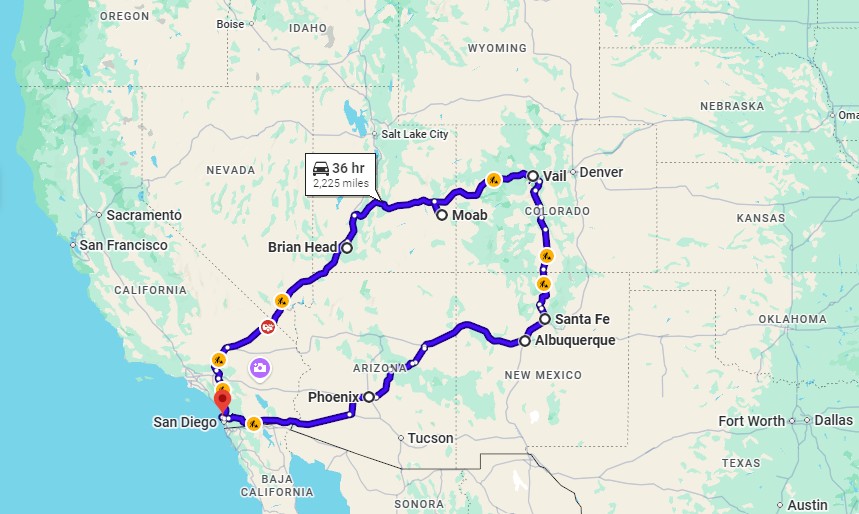
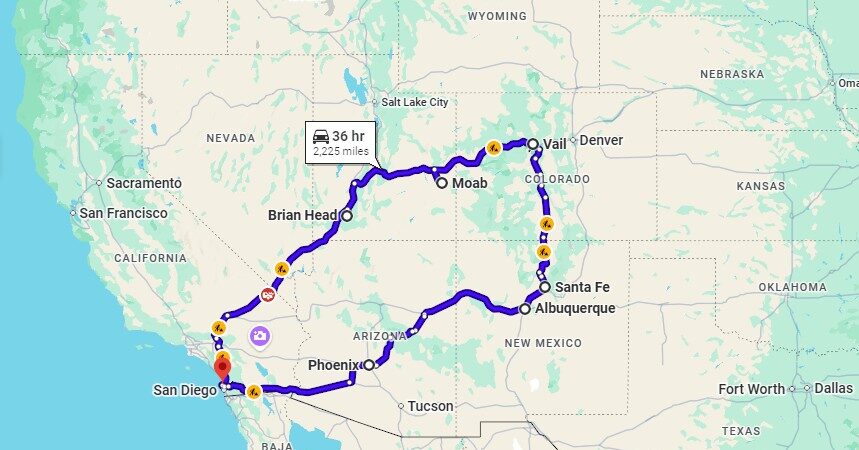
Last week I took a road trip in my Tesla Model 3. I drove 2,225 miles (3,580 km) through California, Nevada, Utah, Colorado, New Mexico, and Arizona.
During the trip, I stopped to charge 18 times, or roughly every 120 miles. What surprised me most was how short the charging stops were. Most lasted only 5–8 minutes.
Tesla’s charging strategy has evolved quite a bit over the years. In the early days, the navigation system generally recommended fewer but longer charging sessions. Today, Tesla optimizes for total trip time and battery health by recommending more frequent, shorter charging stops.
Instead of charging to 80–90%, it often has you leave after reaching only 50–60%, because the battery charges much faster at lower states of charge. I typically arrived at Superchargers with 10–20% remaining and left with about 50–60%.
The result is that charging almost feels like a quick coffee or restroom break rather than a long stop.
Over the course of the trip I consumed approximately 556 kWh of electricity and spent $235 at Tesla Superchargers—about $0.42/kWh.
That is actually quite expensive compared with charging at home. The average residential electricity price in the U.S. is roughly $0.18/kWh, and many utilities offer overnight charging rates as low as $0.10–0.12/kWh.
Using those same 556 kWh:
Tesla Superchargers:$235
Average U.S. residential electricity: approximately $100
Typical overnight electricity rate: approximately $61
Out of curiosity, I also calculated what the same road trip would have cost in a gasoline-powered Toyota Camry. Assuming mostly highway driving, 35 mpg, and an average gasoline price of $4.30 per gallon, the 2,225-mile trip would consume about 64 gallons of gasoline, for a total fuel cost of approximately $275.
So, in the U.S., even using relatively expensive Superchargers, the Model 3 still costs a bit less than a comparable gasoline sedan. Charging at home makes the economics dramatically better.
Then I became curious…
What would this exact same trip cost in Turkey?
For the calculations below I assumed:
Distance: 3,580 km
Electricity consumed: 556 kWh
Exchange rate: 47 TL/USD
Residential electricity: 4.3 TL/kWh
Tesla Supercharger rate: 10.4 TL/kWh
Gasoline: 67 TL/liter
Tesla Model 3 — Home Charging
Electricity consumed: 556 kWh
Residential electricity: 4.3 TL/kWh
Total cost: approximately 2,390 TL ($51)
Tesla Model 3 — Tesla Superchargers
Electricity consumed: 556 kWh
Supercharger rate: 10.4 TL/kWh
Total cost: approximately 5,780 TL ($123)
Toyota Camry (Gasoline)
Assuming approximately 35 mpg (6.7 L/100 km):
Fuel consumed: about 240 liters
Total fuel cost: approximately 16,100 TL ($343)
Volkswagen Passat (Gasoline)
Assuming approximately 8.7 L/100 km:
Fuel consumed: about 311 liters
Total fuel cost: approximately 20,800 TL ($443)
So for the exact same 3,580 km journey in Turkey:
Tesla Model 3 (charged at home):2,390 TL ($51)
Tesla Model 3 (Superchargers only):5,780 TL ($123)
Toyota Camry:16,100 TL ($343)
VW Passat:20,800 TL ($443)
In other words, charging a Model 3 at home in Turkey costs roughly one-ninth as much in energy as driving a comparable gasoline-powered Passat. Even if you relied exclusively on Tesla Superchargers, the Model 3 would still cost only about one-quarter to one-third as much.
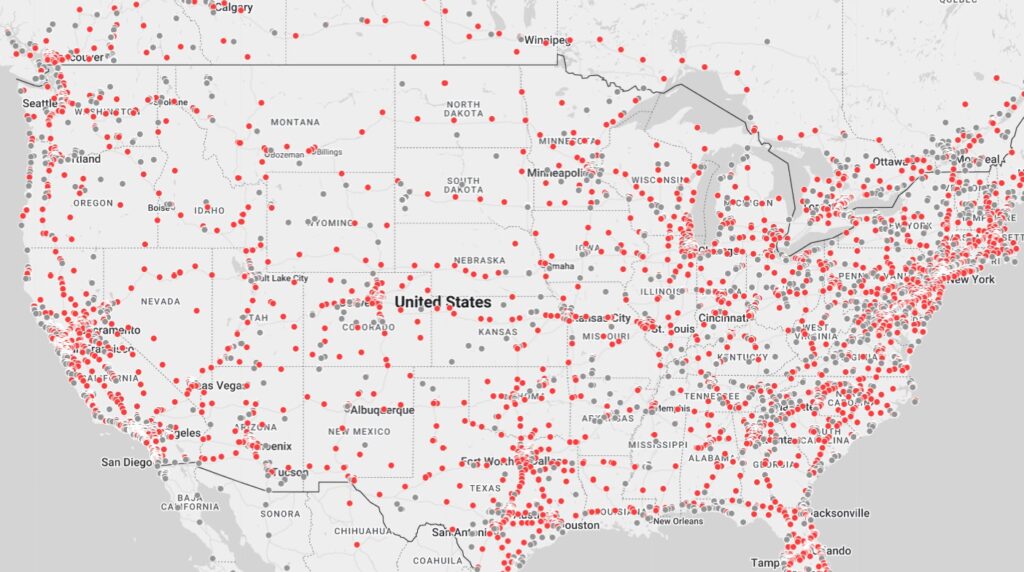
Finally, I checked Tesla’s Supercharger network in Turkey. Today, there are only about 25 Supercharger locations, so the network still looks fairly sparse.
But that reminded me of California around 2015. Back then, the Supercharger map looked remarkably similar. A decade later, the network is everywhere.
I wouldn’t be surprised to see Turkey follow a very similar trajectory over the next several years.
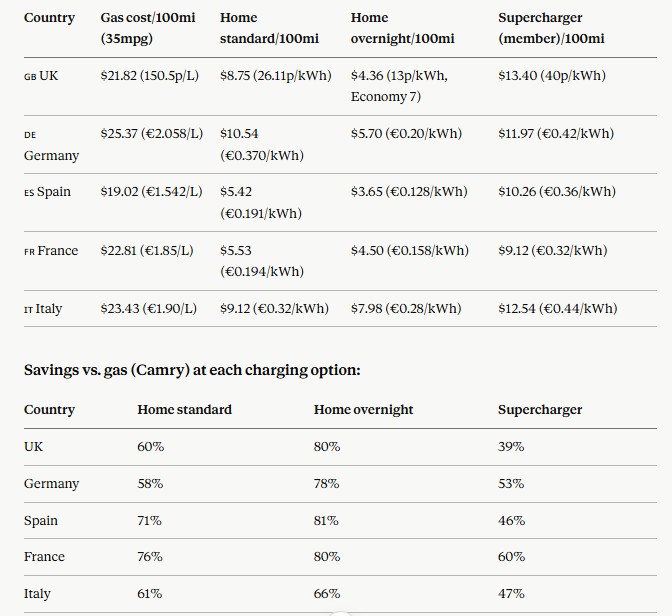
Update: I ran the numbers on this same home-vs-Supercharger-vs-gas comparison for the UK, Germany, Spain, France, and Italy (using a Tesla Model 3 at 25 kWh/100mi and a Toyota Camry at 35 mpg) — here’s how it breaks down by country: